Performance marketing · 22 October 2026 · 3 min read
Why we send ads to WhatsApp, not a web form
Most lead ads end on a web form. Someone taps, a page loads, they type their details and then they wait. By the time someone calls back, the moment has gone.
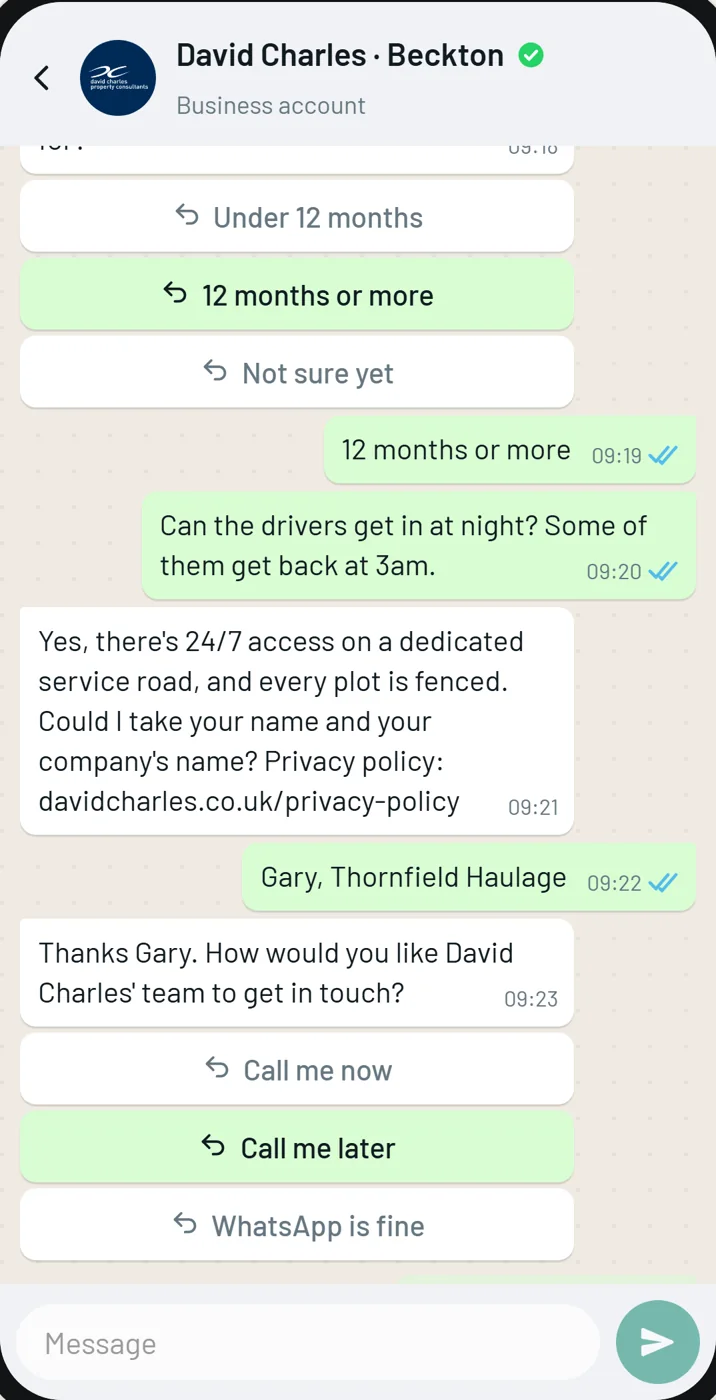
A chat answers. A form waits.
For the Beckton Gas Works campaign we sent every Meta ad straight into WhatsApp. One tap opens a chat with a ready-made message, and an assistant replies at once, day or night.
It asks a few quick questions with tap-to-answer buttons: what the space is for, a name and company, and the best way to get in touch. Then it hands a complete enquiry to the sales team.
What changed
- No page to abandon. People reply in an app they already use every day.
- Better first calls. Sales have the answers before they pick up the phone.
- Real attribution. Every chat lands in the CRM with the ad it came from, so we can see which ads bring enquiries, not just clicks.
In its first six days the campaign reached over 40,000 people at 7p a click, with a 3.9% link click-through rate.
One thing to plan for
When we set up the UK campaign, Meta would not let us optimise click to WhatsApp ads for conversations. We optimised for link clicks instead and let the assistant do the qualifying. It worked well, but it is worth knowing before you build your plan around it.
When a form still makes sense
Forms still have a place. People who arrive from Google Search expect a page, so every site we build gets a short landing page with a three question form and a WhatsApp button. Social traffic goes to the chat. Search traffic gets the choice.
Want the same setup?
We’ll look at your ads and show you where the enquiries are leaking.
Get a free audit